Warning: Undefined variable $request_kind in /home/deustore/public_html/wp-content/themes/deution-theme/includes/renderer.php on line 6949
Transformation roadmap: from competing priorities to an accountable operating path.
An editable service-detail example that shows how to frame the problem, solution, deliverables, steps, results, FAQs, and related services.
The problem
Leadership teams often have more initiatives than the organization can absorb. Priorities overlap, decisions stay open too long, and delivery teams lack a shared view of what must change first.
- Too many active initiatives with unclear trade-offs.
- Ownership spread across functions without one decision path.
- Measures that report activity but do not guide action.
The solution
A focused transformation roadmap connects the strategic choice to an operating sequence. It identifies the constraint, defines the target state, assigns ownership, and creates a review cadence for the first implementation horizon.
The roadmap is built to support decisions—not to become a static presentation.
Core deliverables
The exact scope is editable, but every deliverable should support a decision or implementation step.
How the work progresses
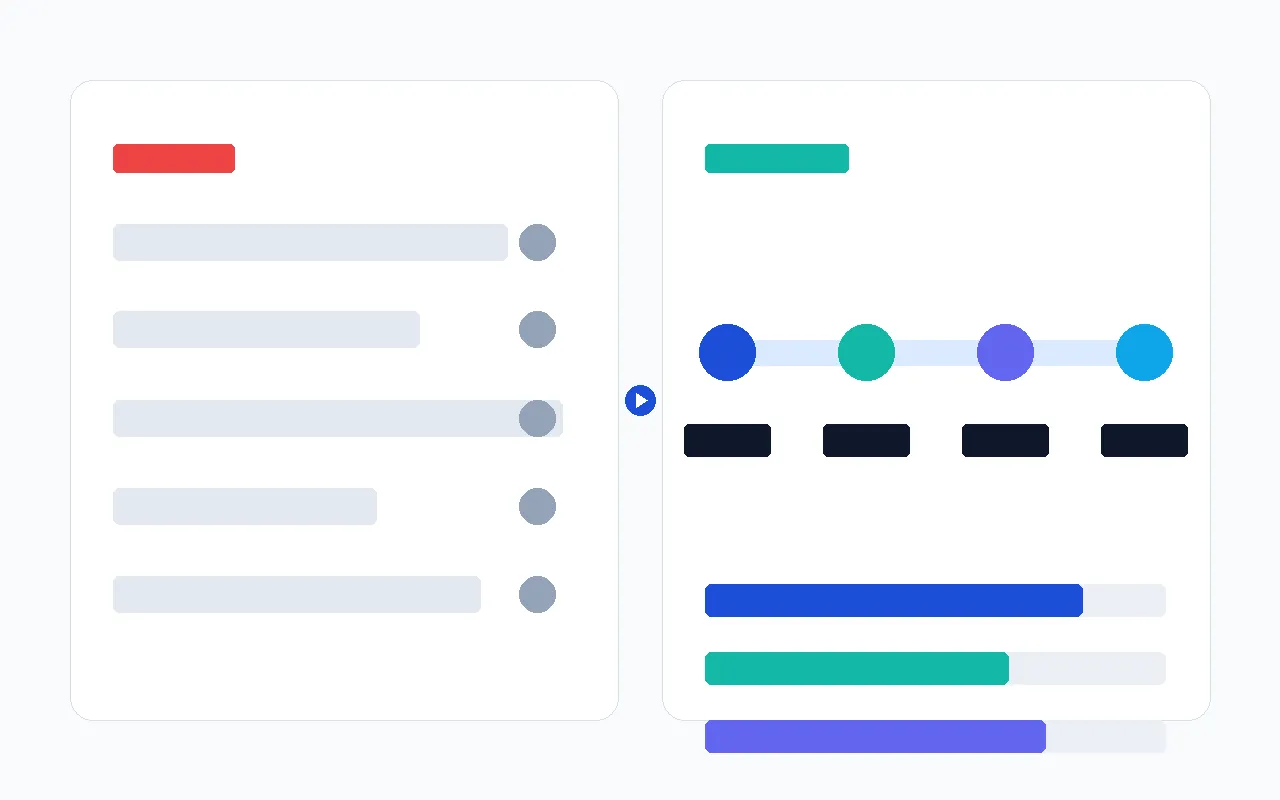
A four-step sequence keeps discovery connected to implementation.
- Frame the decisionAgree on the business question, evidence, scope, and people who must be involved.
- Map the systemUnderstand constraints, dependencies, customer impact, and current ownership.
- Choose the pathPrioritize changes, define the roadmap, and make trade-offs explicit.
- Launch the cadenceBegin the first horizon with owners, measures, reviews, and adjustment points.
What a useful first horizon should create
These are intended engagement outcomes, not guaranteed performance claims.
What changes when the roadmap becomes operational
Teams gain a shared language for priorities, a visible sequence for delivery, and a practical method for reviewing what changed.
- Decisions are connected to named owners.
- Dependencies are visible before they become delays.
- Measures support the next action instead of only reporting the past.
- The roadmap can adapt without losing strategic direction.
Service detail FAQ
Clarify fit, timing, participation, and what happens next.
How long does this type of engagement take?
A focused roadmap can often be developed in four to eight weeks, depending on scope, evidence, stakeholder access, and decision cycles.
Who should be involved?
The smallest useful group usually includes an accountable sponsor, leaders who own affected work, and people close enough to delivery to validate the operating reality.
Do you also support implementation?
Yes. Implementation support can cover governance, operating cadence, service design, workflow changes, and technology enablement where appropriate.
How should this demo page be customized?
Replace the example service, outcomes, timing, visuals, proof, and FAQ with approved information that matches the real offer.
Related services
Continue with the capability that best supports the next decision.
Positioning & value proposition
Clarify the customer problem, market choice, and reason to choose the business.
Operating model design
Translate priorities into roles, handoffs, governance, and a useful performance rhythm.
Technology enablement
Align platforms and automation with the operating model and implementation path.
Use the first conversation to test the fit.
Bring the decision, constraint, or initiative that is hardest to make clear. The next step should become more specific by the end of the conversation.